A first-hand investigation into the welcoming nature, surprising depth, and dogged resilience of Siem Reap's craft beer scene.
Over the course of the past 12 years, I have had the pleasure of visiting Cambodia on three occasions.
My first trip to the ‘Kingdom of Wonder’ took place in 2014. Lugging around a colossal backpack, I zigzagged across the country for ten days. Points of call included Phnom Penh, Siem Reap, Sihanoukville, and Koh Rong. Cramped bus journeys, dingy hostels and cheap beers were the order of the day. Having found myself an immensely entertaining travel buddy in Siem Reap, I thoroughly enjoyed the entire experience nonetheless.
On my next visit, the following year, I was accompanied by my late mother. This time round, the itinerary was largely fixated on local history and culture. We did the full three-day tour of Angkor, explored the grounds of the royal palace in Phnom Penh, and braved the nearby killing fields, amongst many other activities. Somewhere in between, we even managed an overnight excursion to Kampot and Kep. Though a far cry from the relaxing Christmas break I had been craving, it was a truly memorable trip.
Fast forward to April 2026 and I found myself on Cambodian soil once more. My reasons for returning after more than a decade were twofold: Visit an old friend in Siem Reap and check out the local craft beer scene while I’m there.
‘Defeat of Siam’
I arrived in Siem Reap on a Saturday evening after a lengthy bus ride from Phnom Penh. While great strides have been made in improving Cambodia’s physical infrastructure since my first visit, it still takes six hours or more to cover the 320 km separating the country’s capital from its second largest city.
Siem Reap has a population of circa 275,000 and is situated in the northwest of Cambodia. The city is some 10 km removed from the northernmost reaches of Tonle Sap, the largest freshwater lake in Southeast Asia. It is best known for its role as gateway to Angkor Archaeological Park, a UNESCO World Heritage Site containing more than 1000 magnificent temples and countless other remnants of the ancient Khmer kingdom.
The Khmer kingdom flourished from the 9th till the 15th century and, at its height, encompassed much of modern-day Thailand, Laos, Vietnam, and Cambodia. The name Siem Reap itself is sometimes translated as ‘Defeat of Siam’ in reference to a historical battle fought between Khmer and Siamese forces. This translation is broadly contested, though.
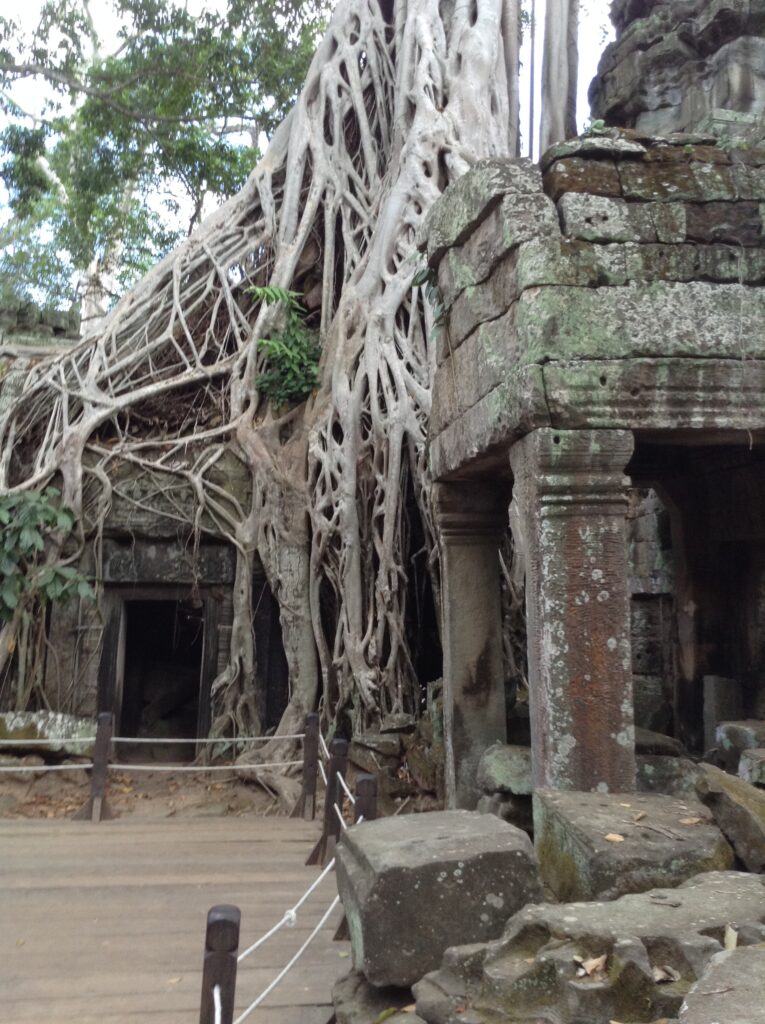
Spanning approximately 400 km², the Angkor Archaeological Park features highlights such as the smiling faces carved into the stone towers of Bayon Temple and the tree-tangled ruins of Ta Prohm. The latter was used as a location in the Hollywood blockbuster Lara Croft: Tomb Raider (2001) starring Angelina Jolie.

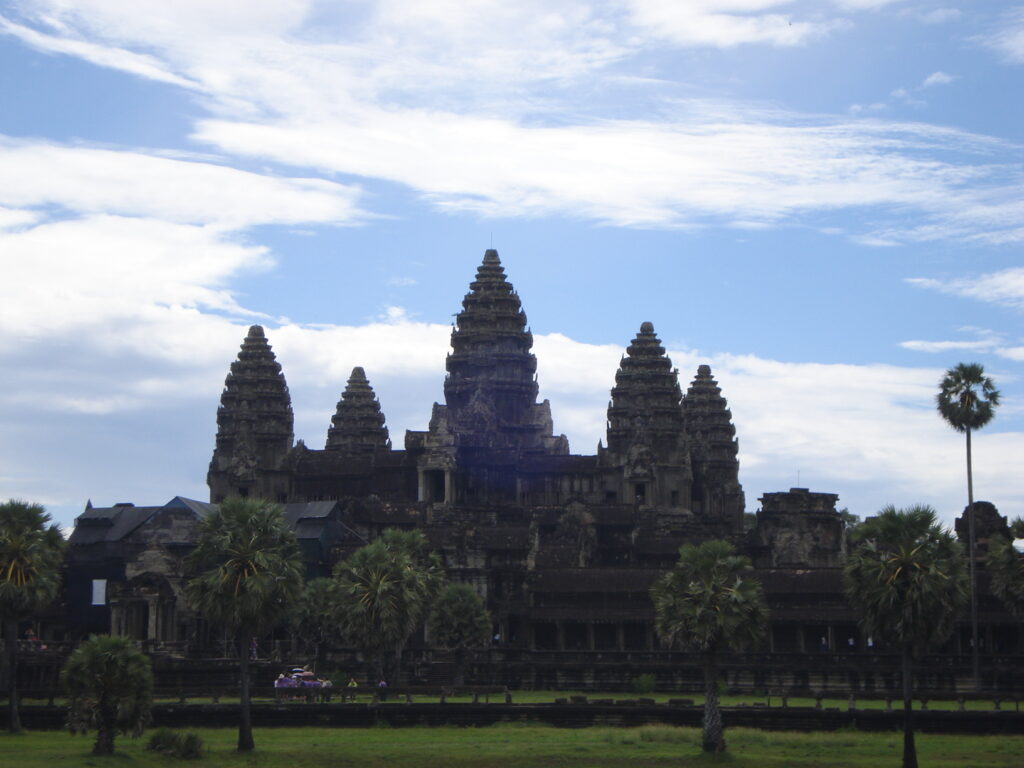
Its undisputed centrepiece, however, is Angkor Wat. The temple’s five central towers symbolise the peaks of Mt. Meru, described as the dwelling place of the gods in Hindu mythology. Hence, the iconic complex is widely regarded as the largest religious structure on earth.
Its proximity to Angkor has made Siem Reap a global tourist destination. As a result, the place possesses a seductive spirit of small-town charm and cosmopolitan allure.
Beer O’clock
Having fallen under its spell during my previous visits, it did not take long for me to embrace the spirit of Siem Reap once more. From the tuk tuk that transported me from the bus terminal to my hotel, to the ladies at the reception desk, the pace was unapologetically unhurried. Although I was yearning for a hearty meal and a cold beer, I made no attempts to speed up the process.

It was coming up to 9 by the time I met up with my friend and her boyfriend, who happens to be a fellow craft beer aficionado. Better still, he is well-integrated into the Siem Reap craft beer scene and graciously offered to introduce me to some of its key actors. That is how I got in touch with Nathan Bowd, founder of Brew Khnear.
Brew Khnear
Nathan, who hails from Cambridgeshire, has called Siem Reap home for over 20 years. Having had his fill of local macro lagers and frustrated with the absence of British ales from his diet, he started homebrewing some 15 years ago. This pursuit to still his own cravings culminated in the establishment of Brew Khnear in 2020.
Loosely translated as ‘Brew Together’, Brew Khnear has since developed a core range consisting of three different IPAs, two pale ales, and an English bitter. Its reach has expanded beyond Siem Reap to include a total of 8 venues in Phnom Penh, Kampot, and Kep. Battambang is on the verge of being included into its scope of influence as well. This steady growth in demand has seen the brewery’s production rise to roughly 1000 litres per month.
In a bid to further facilitate the local craft beer scene, Nathan has also created a website showcasing the five venues in Siem Reap that pour his brews.
Staying true to Brew Khnear’s ideologic emphasis on “getting that work/life balance right”, its founder and I met up at one of these venues on a Monday afternoon. After enjoying several of Nathan’s brews at Embargo, I jumped on the back of his motorbike and let myself be ferried to Pomme.
Pomme Brewhouse
Upon arrival, I was greeted by a familiar face. Pomme founder Olly Smith and I have crossed paths at the past two editions of Brew Asia but were never formally introduced. On that Monday evening in Siem Reap, we made up for those missed opportunities over a couple beers.
Pomme is the prototype of a dual business model unique to the regional craft beer industry. On top of crafting some tasty brews, Olly and the team also operate a pair of hostels in Siem Reap and Battambang.


In fact, the hostel side of Pomme’s operations precedes its brewing endeavours. The Siem Reap branch was founded in October 2019, mere months before the world went into lockdown. It was not until 2023 that the brewing element was introduced with the intention of switching things up in the post-COVID era.
The four beers on tap which I had the pleasure of sampling were the Neon Highway Pale Ale, The James ‘Blonde’, Hazy Days NEIPA, and Copper Cab. Since Pomme upholds an “on until it’s gone” policy, this lineup is ever-changing. Outside the hostel compounds, the brewery’s beers are poured at a handful of restaurants in Siem Reap.

On top of that, a collaboration with the Apsara Theater in Siem Reap has brought forth the Kenary Blonde. Pomme has also started experimenting with hard seltzers, resulting in the Summer Fruit. The brewery’s current output is roughly 500 litres per month.
Krama Craft Brewery
Krama is the third and final Siem Reap-based microbrewery that has been listed as a founding member of the Craft Beer Association of Cambodia (CBAC). Unfortunately, it is the only one I was unable to visit during my all too brief stay.
Operational since 2023, Krama was originally known as Siem Reap Craft Brewery. The new name refers to a traditional, highly versatile Cambodian garment donned by men, women, and children alike. The krama typically has a checkered (gingham) pattern – most commonly in red and white or blue and white – and can be worn as a scarf, headdress, belt, hip wrapper, or even as a sarong. It is also often used as a towel, carrying cloth for infants, and hammock. Additionally, it is an ever-present accessory in the age-old Khmer martial art of Bokator. Its omnipresence in everyday life has seen the krama elevated to somewhat of a national symbol.
Krama Craft Brewery strives to fuse a similar blend of familiarity and diversity in their range of beers. From refreshing IPAs bursting with tropical fruit notes to rich stouts with deep flavours, each expression is prepared with local ingredients capable of capturing the essence of Cambodia. For those interested in observing this process first hand, tours of the production facility are available upon request. Since I did not get round to it, I have yet another reason to return to Siem Reap as soon as possible.
IB Taphouse
Another local favourite with an (inter)national presence is IB Taphouse. Originally conceived in Itoshima by a collective of Japanese brewers, IB Brewing’s foray into Cambodia has so far led to the establishment of a pair of taphouses in Siem Reap. A taphouse in Kampot is also in the making.
During my stay in Siem Reap, I popped into the IB Taphouse on Wat Bo Road. This cozy venue doubles as IB’s local production facility. Equipped with half a dozen 200 litre tanks, a core range of six beers inspired by local ingredients are prepared for on-site consumption as well as provision of the sister venue on BBU Road. This range includes the Jorumooi Session IPA, Neon Lemon IPA, and Yeak Laom Coffee Brown Ale.


Of the three beers I tasted, the Jorumooi was my favourite. Brewed with Cambodian jasmine rice, it is a crisp, light number with subtle hints of citrus and a clean, dry finish. I struggle to think of a better remedy against the aggressive heat of dry season.
I also thoroughly enjoyed the Yeak Laom Coffee Brown Ale, which is brewed with coffee beans from Ratanakiri province in northeastern Cambodia. The name Yeak Laom refers to a volcanic crater lake in the area. The Kork Kdav Saison is characterised by ingredients sourced from Ratanakiri as well – black and white pepper, to be specific.
The Mont Sne, a light-bodied wheat beer, and Chnai Wit complete IB Brewing’s core range in Cambodia. Those too have been added to my list of things to do the next time I am in Siem Reap.
HomeBrew Siem Reap
My meanderings through Siem Reap also facilitated a pit stop at a grassroots gem. Although closely affiliated with Lion Brewery in Singapore, HomeBrew stays true to its name in terms of production output. The six in-house beers on tap are all brewed in a backroom that houses three 60 litre tanks. However, this rudimentary setup does not take away from the quality of those beers. Far from it.
I tried three beers at HomeBrew – the Mango IPA, Dark Palm Ale, and Nova Lager. The second of these stellar concoctions was particularly pleasing to my pallet. The fact that the brewer responsible for its creation was manning the bar that night further enhanced the venue’s homely feel. Not only was he eager to discuss ideas for new recipes, I was also able to pick his brains about the current state of the craft beer sector in Siem Reap.


Rolling with the Punches
Sadly, when it comes to the future prospects for craft beer producers in Cambodia, even an eternal optimist would struggle to identify silver linings. While alcohol consumption in the Kingdom of Wonder has reportedly increased fivefold over the past two decades, with beer being the drink of choice for many, very few Khmer drinkers are inclined to turn to craft.
This lack of engagement from the local population can mainly be attributed to price considerations. In a country where the average monthly salary is around $300 (USD), being charged anywhere between $3.50 and $7.00 for an artisanal brew is a huge deterrent to jumping on the craft bandwagon. By contrast, locally produced macro beers like Angkor, Cambodia, and Krud can cost as little as $0.75 per mug at bars and restaurants.
Owing to this disparity, the survival of Cambodian craft beer businesses is almost entirely dependent on a small wealthy upper class, an even smaller expat community, and tourists. More so than in Phnom Penh, where much of the local gentry and expats reside, post-COVID fluctuations in tourist arrivals are impacting sales in Siem Reap. While the number of international tourists entering the country rebounded to 6.7 million in 2024, exceeding previous highs registered in 2019, a decrease of 16.9% to 5.57 million was recorded in 2025. Needless to say, the uncertainty that accompanies such fluctuations can be debilitating.
The competition is staggering too. Tourism is Siem Reap’s bread and butter, and there are hundreds of F&B outlets that cater to a dwindling number of visitors. For much of the year, at least. I was informed that peak season has been reduced to the period between November and February, followed by a brief spike during Khmer New Year in mid-April. At any other time, business is agonisingly slow.
Final Rounds
Nevertheless, the brewers of Siem Reap remain dedicated to their craft. The future may be as uncertain as ever but the zeal to create high quality beers is impervious to external factors. Even if demand were to plummet, I expect Nathan and his peers would continue brewing for their own personal enjoyment.
Thankfully, despite all the challenges, this doomsday scenario seems rather far-fetched. Business may be slow, but there are still a good number of venues in Siem Reap that see the advantages of serving craft beer.
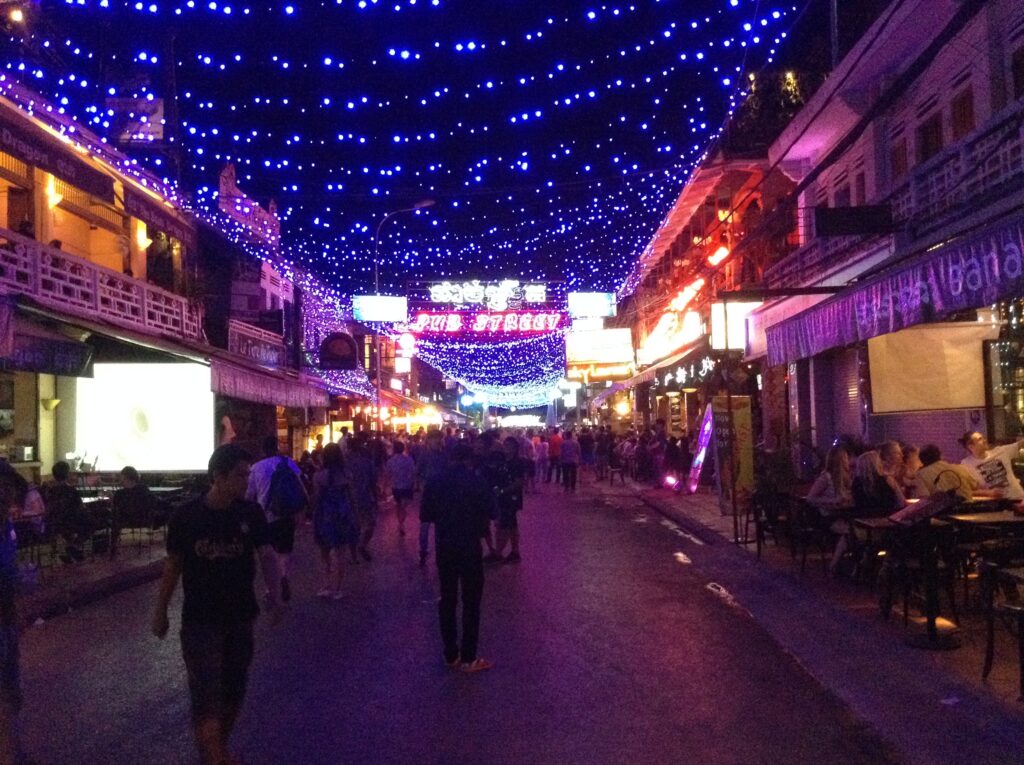
There is The Local – which pours up to 32 craft beers on a good day but closes its doors during low season – and Beer Yard, the only bottle shop in town. Miss Wong, an elegant cocktail bar that occasionally serves local “boutique” beers, is also worth checking out. And let’s not forget the Welsh Consulate, located just off the iconic Pub Street, as well as the other venues listed in Nathan’s guide.


On my first two visits to Siem Reap, I had not yet developed an appreciation for craft beer. My fondness for the place stemmed from its fascinating history and provincial feel. Those draw factors remain intact and are now complemented with a welcoming craft beer community. There is no way I will let another decade pass before I return again.