
An exploration of the Indic Gruit, a modern interpretation of an age-old beer style by Biergarten Brewery in Bengaluru, India.
Over the course of the past few decades, the global craft beer revolution has revived a multitude of traditional brews from the brink of extinction. Almost forgotten styles such as barrel-aged beers, cask ales, and gose have been elevated to coveted drinking experiences. Another medieval concoction captivating the imagination of craft aficionados and curious drinkers alike is gruit beer.
The term gruit is derived from the German word for “herb” (kraut)and refers to the mixture of botanicals at its base. Common ingredients include bog myrtle (sweet gale), dandelion, ground ivy, heather, horehound, juniper berries, mugwort, rosemary, sage, and yarrow. Spices like cinnamon, ginger, and nutmeg are often added as well. The result is a complex flavour profile that can be bitter, sweet, floral, or spicy, depending on the combination applied.
Gruit’s diverse nature has inspired innovative brewers around the world to start experimenting with herbs again. A Belgian brewery, aptly named Gruut, has exclusively produced gruit-based beers since 2009. Modern renditions have also been created by the likes of Williams Brothers Brewing Co. (Scotland) and Brasserie Dupont (Belgium).
It was only a matter of time before Asian brewers started embracing gruit as well. One of the first to try its hand at revamping this age-old style is Biergarten Brewery in Bengaluru. But before we get into that, let’s briefly dive into the history of the style itself.
The Origins of Gruit
Gruit beer predates the widespread use of hops in the brewing process. Originating in regions now part of the Netherlands, Belgium, and northwestern Germany, the earliest reference to its existence dates back to the late 10th century.
During the 11th century, a licensing system pertaining to the production and sale of gruit was implemented by numerous local authorities. This system – known as Grutgerechtigkeit (gruit licence) – effectively taxed beer and regulated entry to local markets.
For instance, brewers operating within a certain city state or diocese were not permitted to sell beer that did not contain the local gruit. Similarly, all imports were restricted. Moreover, the holder of a licence was able to calculate each brewer’s production capacity based on the quantities of gruit sold to them. Needless to say, local gruit recipes were often closely guarded secrets.
As time progressed, these recipes were gradually substituted by hops. This substitution was largely driven by cost considerations. While the licensing system artificially inflated the price of gruit, hops were not taxed at all. Hops were also found to be more effective as a preservative.
In many parts of modern-day Germany, the introduction of the Reinheitsgebot – a purity order that decreed beer could only be prepared using water, barley, and hops – outlawed all pre-existing brewing techniques. Nevertheless, in some areas of Westphalia, gruit beer was locally produced until the 17th century.
Living Relics
Further afield, outside the regions where the gruit monopolies and successive purity order were enforced, some traditional brews survived the advent of hops. One such example is sahti, an unhopped ale from Finland that is spiced with juniper sprigs.
The use of spruce tips for brewing purposes also remained prevalent in high northern latitudes. Apart from possessing antiseptic properties capable of extending shelf life, these tips are abundantly available year-round. This dispels the need for hops to be imported from warmer regions.
The use of botanicals to initiate fermentation is a long-standing practice on the Indian subcontinent as well, specifically for the purpose of inducing bitterness. Historically, bitter botanicals were valued for their digestive and restorative qualities. Hence, the infusion of bitter elements in traditional Indian dishes and beverages is commonplace. These elements serve to balance, stimulate, and extend flavour, rather than dominate. Instead of standing apart, the bitterness works alongside other tastes and aromas.

The Indic Gruit
Drawing inspiration from this long-standing practice, the Biergarten Brewery has reinterpreted the historic gruit style through an Indian lens.
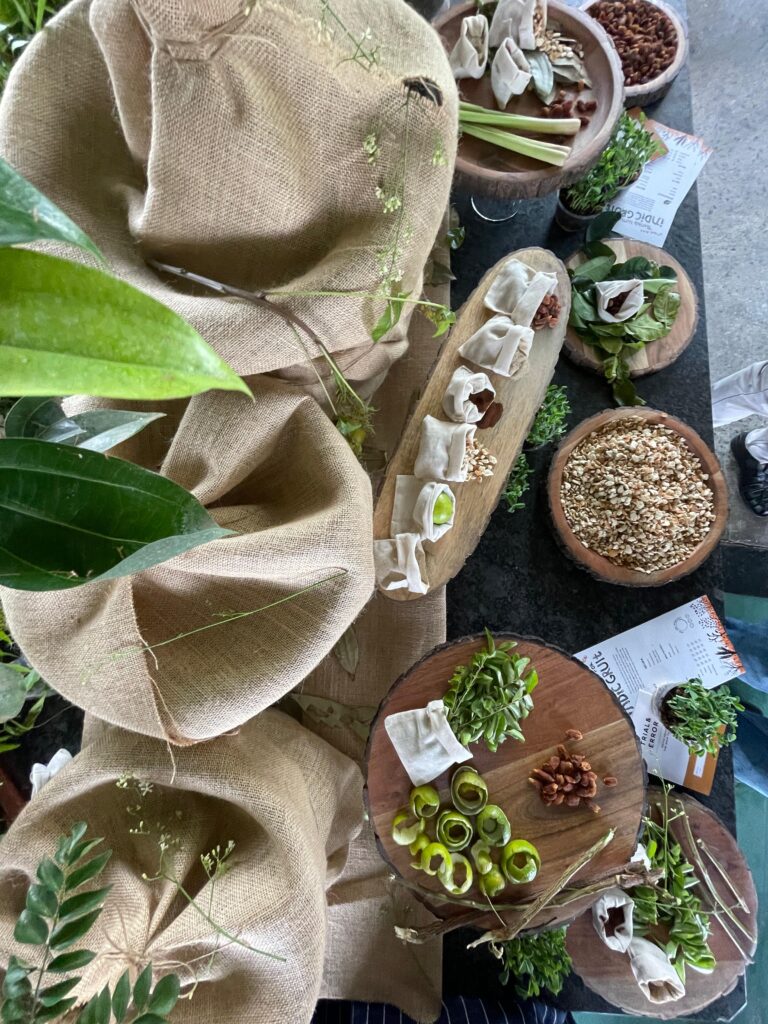
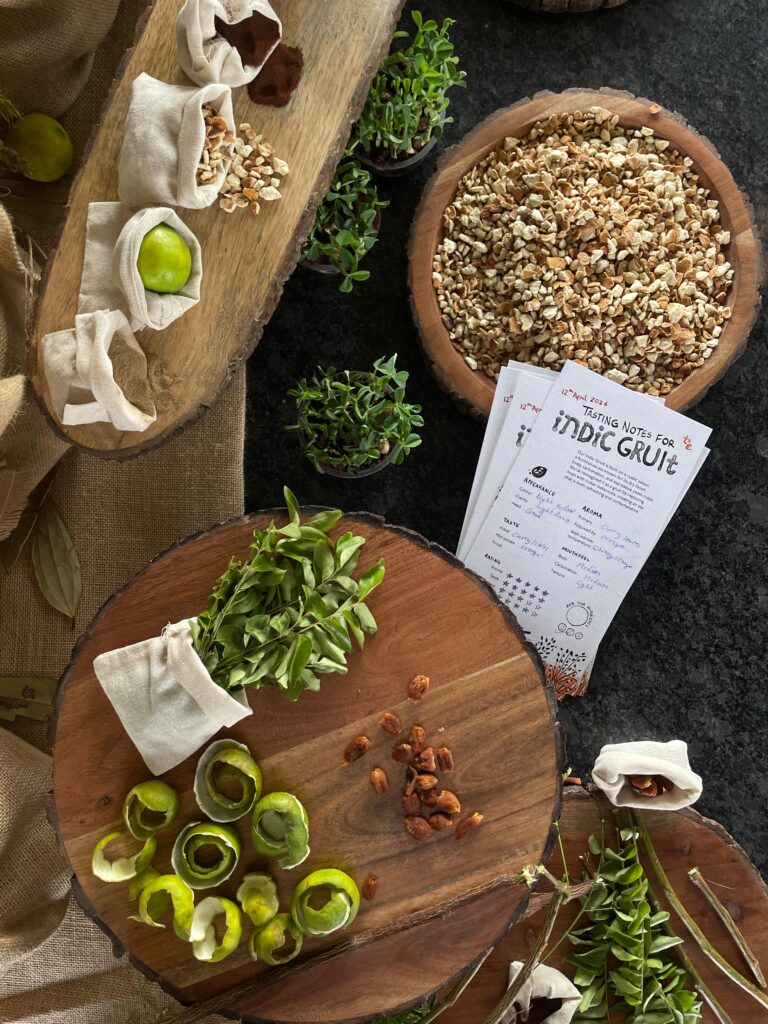
The Indic Gruit is brewed with a blend of indigenous botanicals and herbs. Ingredients like neem, giloy, and brahmi contribute alkaloids, creating a deep, medicinal bitterness that generates structure and depth. The addition of citrus peels, chicory, and bay leaf bring polyphenols to the mix. These compounds induce dryness and a tannic grip that shapes the finish. Meanwhile, fresh components like lemongrass, lemon leaves, curry leaves, and parijaat flowers introduce essential oils that provide an aromatic lift, brightness, and complexity. The result is an unhopped beer that is layered as well as refreshing.
The beer opens bright and citrusy, progresses into a structured yet restrained bitterness which is both herbal and savoury, and culminates in a dry, earthy finish. Designed to unfold gradually, the Indic Gruit rewards attention without demanding it. The textural bitterness at its core is released gradually, thereby complimenting the central themes of acidity and dryness. The accompanying sharper edges have been softened through the infusion of native Mahua flowers, adding warmth and sweetness to the overall profile.
This sets the Indic Gruit apart from many modern beers, in which the bitterness contained is often sharp and singular. On the contrary, the bitterness acts as a thread that holds everything together, allowing other elements to come through with clarity.
Sound enticing? The Indic Gruit is now available in limited batches at the Biergarten Brewery & Kitchen in Koramangala, Bengaluru.

Trial & Error
The Indic Gruit is the latest creation of Trial & Error (T&E), an intellectual property by Biergarten dedicated to exploring alternative approaches to beer and flavour.
Conceptualised as an experimental series, the project brings together a small team of professionals from different disciplines focused on shaping a cohesive outcome in which brewing, design, and narrative are closely aligned. Within this framework, conventional perceptions of what beer entails and how it can be made are challenged.
Each release explores alternative ingredients, brewing techniques, background stories, and product presentation. Previous editions include a Champagne Brut and the Koji Jowar Saison, amongst others.
The visual identity for T&E is developed in collaboration with Small Town Folk, a Bengaluru-based design studio known for its concept-driven approach to brand building. The project is also supported by Kumud Dadlani, a F&B consultant working across the fields of research, product development, and storytelling.
For more information, feel free to reach out to Kumud at: kumud.dadlani@gmail.com


